
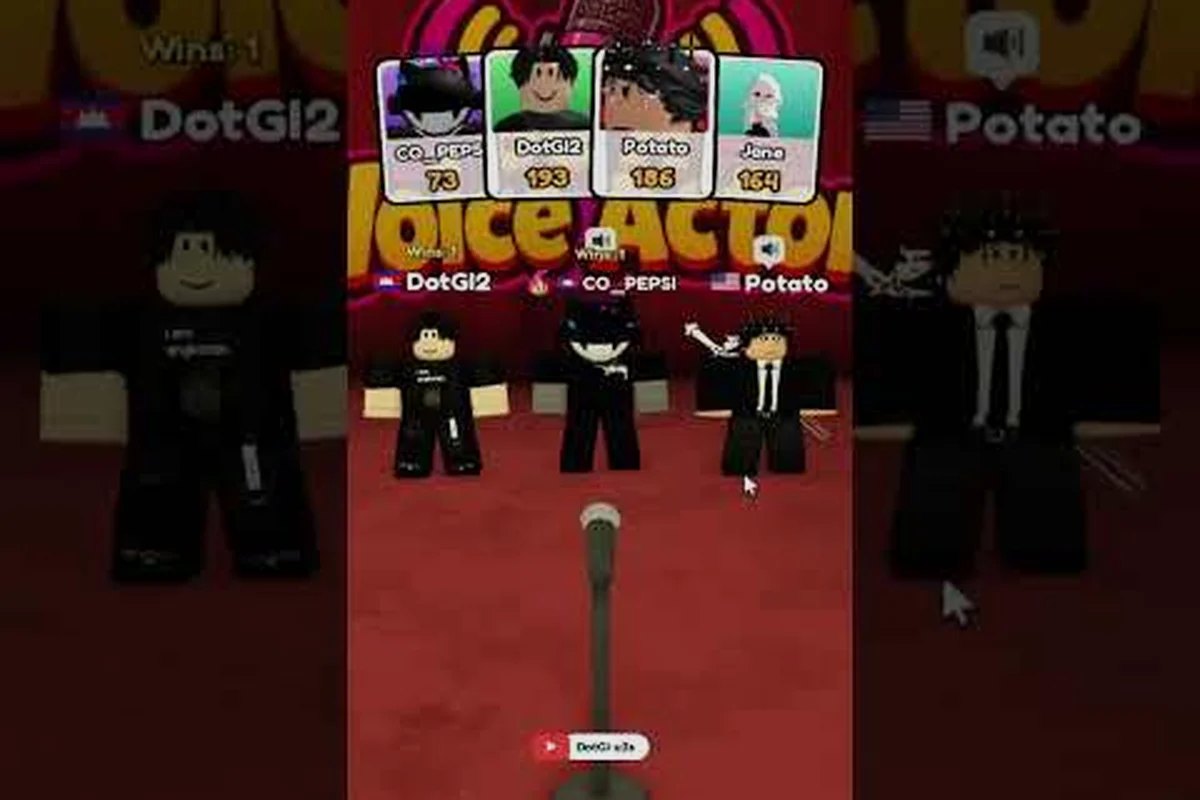
Deep voice delivery is the fastest way to separate yourself from a lobby full of players who all sound the same, because the scoring system in Be A Voice Actor rewards contrast as much as accuracy. When a sound clip plays and seven players take turns on the microphone, the person who commits to a full vocal shift almost always pulls higher marks than someone who hedges. This guide breaks down how to train a be a voice actor deep voice, when to push into high pitch territory, and how accent challenges, singing sounds, beatboxing sounds, and whispering sounds fit into a complete scoring strategy.
Understanding Deep Voice Mechanics in Be A Voice Actor
A deep voice impression works because it changes the physical shape of your vocal tract, not just the volume of your delivery. When you drop your larynx and relax your throat, the resonant cavity lengthens and produces a darker, fuller tone that reads clearly through Roblox voice chat compression. Players who understand this distinction between pitch and resonance consistently outperform those who simply speak louder or slower.
The game's scoring round moves quickly, so your deep voice needs to be ready before the clip finishes playing. According to community gameplay recordings, each player gets only a few seconds on the microphone per round, which means there is no time to warm up mid-round. The official Be A Voice Actor game page confirms that voice chat is required to compete, and the round structure leaves little room for hesitation.
Building a Reliable Deep Voice Baseline
Start by finding your natural speaking pitch, then practice dropping it by a musical third or fifth without straining. The goal is not to sound like a cartoon villain but to produce a controlled, sustained low tone that you can hold for several seconds. A useful drill is to hum at your lowest comfortable note, then speak a simple phrase on that same pitch while keeping your jaw relaxed.
The table below compares the physical adjustments that produce different vocal qualities, and understanding the why behind each column matters more than memorizing the rows. A lowered larynx, for example, does not automatically create a deep voice — it must be paired with a slow, steady airstream, because rushing the exhale collapses the open mouth shape and forces the throat to compensate with strain. This is the exact failure pattern that turns a controlled low tone into a raspy, villainous growl that fails the scoring lobby's pitch-stability check.
| Vocal Quality | Larynx Position | Mouth Shape | Airflow | Common Mistake |
|---|---|---|---|---|
| Deep Voice | Lowered | Open, relaxed | Slow, steady | Straining the throat |
| High Pitch Voice | Raised | Narrowed | Fast, light | Squeaking or cracking |
| Whispering Sound | Neutral | Slightly open | Minimal | Letting vocal cords engage |
| Beatboxing Sound | Neutral | Variable | Pulsed | Losing rhythm consistency |
Each adjustment requires a different combination of muscle control, and practicing them in isolation prevents you from accidentally blending two incompatible techniques. A deep voice that slips into a whisper loses its power, while a high pitch voice that cracks under pressure signals uncertainty to the scoring lobby.
Why Contrast Beats Consistency
In a seven player scoring round, the judges hear six other attempts before yours, which means a deep voice that arrives after five high pitched or mid range deliveries creates instant contrast. Players who can switch between vocal registers on demand hold a structural advantage because they can adapt to whatever the lobby is producing. The key is not to use a deep voice for every sound but to deploy it when the clip calls for weight, authority, or size.
Training a Be A Voice Actor High Pitch Voice
High pitch delivery is the natural counterpoint to a deep voice, and mastering both gives you a complete vocal range that covers almost every sound category in the game. A high pitch voice requires raising your larynx and tightening your vocal cords slightly, but the real challenge is maintaining clarity at the top of your range without slipping into a strained squeak.
The most common failure mode for high pitch attempts is pushing too hard from the chest instead of shifting into a lighter head voice. When you force a high pitch from your chest register, your vocal cords tense up and the sound becomes thin or breaks entirely. Community testing consistently shows that players who practice a smooth transition between chest and head voice score higher on high pitch sounds than those who try to muscle through.
High Pitch Drills That Translate to Scoring Rounds
Practice sliding from your natural pitch up to a comfortable falsetto and back down without a break in the middle. This exercise builds the coordination you need to hit a high pitch on demand when a clip starts playing. Another effective drill is to imitate a small animal or a cartoon character, because those sounds naturally sit in the upper register and force you to use a lighter vocal production.
The table below shows how different high pitch approaches affect your scoring potential: each approach trades off vocal register, clarity, and sustain, and the game's scoring engine weighs these factors differently depending on the clip type. For example, a Chest Push registers in the chest register with low clarity and short sustain, which is why it scores best on loud, aggressive sounds like a battle cry or a monster roar — the game rewards the forceful attack but penalizes the lack of sustained pitch control. In contrast, Falsetto sits in the head register with high clarity and long sustain, making it the strongest choice for singing sounds and sustained notes, but it can sound thin on clips that require body. Understanding these trade-offs before you attempt a high pitch drill lets you match your approach to the clip's expected vocal register, so you are not just hitting the note but also maximizing the scoring potential the game assigns to that specific sound category.
| Approach | Vocal Register | Clarity | Sustain | Best For |
|---|---|---|---|---|
| Chest Push | Chest | Low | Short | Loud, aggressive sounds |
| Head Voice | Head | High | Medium | Cartoon, animal sounds |
| Falsetto | Head | High | Long | Singing, sustained notes |
| Mixed Voice | Blended | Medium | Long | Versatile impressions |
A mixed voice approach gives you the most flexibility because it blends chest and head resonance to produce a high pitch that still carries body. This is particularly useful for singing sounds, where a pure falsetto can sound thin and unsupported.
Mastering the Be A Voice Actor Accent Challenge
Accent challenges are where voice acting skill separates from raw vocal range, because an accent requires you to change not just pitch but also rhythm, vowel shapes, and consonant emphasis. A deep voice with a convincing accent is a powerful combination, but the accent itself often matters more to the judges than the pitch underneath it.
The most effective way to approach an accent challenge is to identify two or three signature sounds that define the accent and exaggerate them slightly. For example, a British accent shifts certain vowel sounds and drops the rhotic "r," while a Southern American accent draws out vowels and softens final consonants. You do not need a perfect accent to score well; you need a recognizable one that reads clearly through voice chat.
Accent Categories and Their Signature Features
Different accents require different vocal adjustments, and some pair naturally with a deep voice while others work better with a higher pitch. A deep voice naturally lowers your larynx and widens your vocal tract, which complements accents that already favor low resonance and hard consonant attack — think Russian or Southern US — because the acoustic profile of the accent reinforces the depth instead of fighting it. Conversely, a rising-intonation accent like Australian tends to pull your pitch upward at phrase endings, which can thin out a deep voice unless you consciously anchor the final syllable back down. The table below breaks down common accent families and what makes them recognizable:
| Accent Family | Signature Feature | Pitch Tendency | Difficulty | Deep Voice Compatibility |
|---|---|---|---|---|
| British RP | Non-rhotic "r", clipped vowels | Mid to high | Medium | Moderate |
| Southern US | Drawn vowels, soft consonants | Low to mid | Easy | High |
| Australian | Rising intonation, nasal quality | Mid | Medium | Moderate |
| Russian | Hard consonants, rolled "r" | Low | Hard | Very high |
| French | Nasal vowels, soft "r" | Mid | Medium | Moderate |
A Russian accent paired with a deep voice is one of the strongest combinations in the game because both elements reinforce each other, creating an impression that sounds authoritative and distinct. The accent challenge rewards commitment, so pick an accent you can sustain for the full clip rather than one that falls apart halfway through.
Practicing Accents Without Burning Out
Accent practice works best in short, focused sessions because your ear needs time to internalize new sound patterns. Record yourself speaking a neutral sentence, then repeat it in your target accent while listening for the specific vowel and consonant shifts. The sounds list guide covers the full range of sound categories you will encounter, which helps you anticipate which accents pair well with specific clips.
Singing Sounds and Beatboxing Sounds Strategy
Singing sounds and beatboxing sounds test a completely different skill set from spoken impressions, because they require rhythmic precision and pitch control simultaneously. A deep voice can anchor a singing sound if the melody sits in your comfortable range, but forcing a low note on a high melody produces a muddy, off key result that judges punish quickly.
The key to singing sounds is matching the melody first and worrying about vocal quality second. If the clip features a high melody, use a lighter head voice even if your deep voice is your strongest asset. If the melody sits low, a deep voice can add richness and power that makes your attempt stand out. Beatboxing sounds reward rhythmic accuracy above all else, so a simple kick snare pattern executed cleanly beats a complex pattern that falls out of time.
Beatboxing Patterns That Score Well
Beatboxing in Be A Voice Actor does not require professional skill, but it does require a basic understanding of how to layer sounds. The most reliable pattern for beginners is a simple kick hi hat snare sequence, because it is easy to sustain and reads clearly through voice chat. The table below ranks common beatboxing patterns by difficulty and scoring potential:
| Pattern | Sounds Used | Difficulty | Scoring Potential | Common Failure |
|---|---|---|---|---|
| Kick Snare | "b" + "ts" | Easy | Medium | Losing the pulse |
| Kick Hi-hat Snare | "b" + "t" + "ts" | Medium | High | Rushing the hi-hat |
| Kick Snare Hi-hat Roll | "b" + "ts" + "t-t-t" | Hard | Very high | Breaking rhythm |
| Bass Drop | Low hum + "b" | Medium | High | Running out of air |
A bass drop pattern pairs naturally with a deep voice because the low hum uses the same vocal mechanics you already practice for deep voice delivery. The musical sounds guide explores additional musical sound categories that reward rhythmic precision and pitch control.
Singing Sounds and Vocal Range
Singing sounds in the game span a wide range of melodies, from simple jingles to more complex vocal lines. Your deep voice is an asset on low melodies but a liability on high ones, which is why training both ends of your range matters. Practice singing simple scales in both your chest voice and head voice, then apply that control to the melodies you encounter in scoring rounds.
Whispering Sounds and Dynamic Control
Whispering sounds are deceptively difficult because they require you to remove vocal cord vibration entirely while still projecting enough air to be heard through voice chat. A whisper that is too quiet disappears into the microphone, while a whisper that engages the vocal cords becomes a soft spoken sound instead of a true whisper.
The technique for a clean whisper is to keep your vocal cords open while pushing a steady stream of air through your mouth. Your lips and tongue do the work of shaping the sound, which means you can whisper with surprising clarity if you articulate carefully. A deep voice does not directly help with whispering, but the breath control you develop for deep voice delivery carries over and helps you sustain a whisper for longer.
Whispering in a Scoring Context
Whispering sounds often appear in clips that call for secrecy, intimacy, or tension, and judges respond to a whisper that sounds intentional rather than accidental. In Roblox voice acting auditions, a true whisper — where the vocal cords stay fully open and only turbulent breath passes through — risks losing points if the microphone gain is too low, because the judge's scoring rubric treats inaudible delivery as a failed take rather than a stylistic choice. That is why many deep voice performers switch to a stage whisper for tense lines: adding just enough vocal fold vibration keeps the low-end resonance of a deep voice intact while preserving the hushed, conspiratorial tone the prompt demands. The table below compares whispering approaches and their scoring impact:
| Approach | Vocal Cord Engagement | Projection | Clarity | Scoring Impact |
|---|---|---|---|---|
| True Whisper | None | Low | Medium | High if audible |
| Stage Whisper | Partial | Medium | High | Very high |
| Soft Spoken | Full | Medium | High | Medium |
| Breathy Voice | Partial | Medium | Medium | Medium |
A stage whisper, which adds a small amount of vocal cord vibration to a whisper, often scores highest because it projects clearly while still reading as a whisper. The sound accuracy guide breaks down how judges evaluate different sound categories and what pushes a score from average to exceptional.
Building a Complete Vocal Training Routine
A complete training routine combines all six vocal skills into a single practice session that you can complete in fifteen to twenty minutes. The goal is not to master everything at once but to build enough control in each area that you can switch between them on demand when a scoring round starts.
Start with five minutes of deep voice and high pitch drills to warm up your full range, then spend five minutes on accent practice using a single accent you want to improve. Follow that with five minutes of singing and beatboxing practice, and finish with five minutes of whispering and dynamic control work. This structure ensures that every skill gets attention without overwhelming your voice.
Weekly Training Schedule
Consistency matters more than intensity because your vocal muscles need regular practice to build the coordination required for quick switches between deep voice, high pitch, accent challenge, singing, beatboxing, and whispering sounds. A daily 20-minute session trains your larynx to hold lower register placements without strain, which directly improves your deep voice stability during rapid command swaps in Be A Voice Actor. Skipping two or three days forces your vocal folds to re-learn the subglottal pressure control that Monday and Wednesday sessions reinforce, so the schedule below staggers primary and secondary focuses to prevent fatigue while keeping all six skills active.
| Day | Primary Focus | Secondary Focus | Duration |
|---|---|---|---|
| Monday | Deep voice | Whispering | 20 min |
| Tuesday | High pitch | Singing | 20 min |
| Wednesday | Accent challenge | Deep voice | 20 min |
| Thursday | Beatboxing | High pitch | 20 min |
| Friday | Singing | Accent challenge | 20 min |
| Saturday | All skills | Full range | 30 min |
| Sunday | Rest | Light humming | 10 min |
The beginner friendly sounds guide offers additional sound recommendations for players who are still building their vocal foundation, which pairs well with this training schedule. If your deep voice breaks into vocal fry during Wednesday's accent challenge secondary focus, swap the primary slot to a 10-minute laryngeal massage sequence (gentle descending glides from chest register into subharmonic territory) before attempting the accent commands; this restores subglottal pressure control without overloading the folds, and the guide's tier list flags which beginner sounds build that same low-register coordination first.
Frequently Asked Questions
How do I make my deep voice sound natural instead of forced?
Relax your throat and lower your larynx gently rather than pushing your voice down from the chest. Practice humming at your lowest comfortable note, then speak on that same pitch while keeping your jaw loose. A natural deep voice feels effortless and sustainable, while a forced one strains quickly and sounds artificial through voice chat.
What is the best accent to pair with a deep voice?
A Russian accent pairs exceptionally well with a deep voice because both elements reinforce each other, creating an authoritative impression that stands out in a scoring lobby. Southern American accents also work well because they naturally sit in a lower register. Pick an accent you can sustain for a full clip rather than one that falls apart halfway through.
Can I use a deep voice for singing sounds?
Yes, but only when the melody sits in your comfortable low range. Forcing a deep voice onto a high melody produces a muddy, off key result that judges punish quickly. Match the melody first and worry about vocal quality second, switching to a lighter head voice when the clip calls for higher notes.
How do I practice beatboxing sounds without annoying my household?
Practice simple patterns like kick snare at low volume while focusing on rhythm rather than volume. A basic kick hi hat snare sequence executed cleanly beats a complex pattern that falls out of time. Use a pillow or soft surface to muffle the sound while you build muscle memory for the patterns.
Why does my whisper sound like a soft spoken voice instead of a true whisper?
Your vocal cords are likely engaging partially when they should stay completely open. Practice pushing a steady stream of air through your mouth while keeping your vocal cords relaxed, and focus on articulating with your lips and tongue. A stage whisper with slight vocal cord vibration often scores highest because it projects clearly while still reading as a whisper.