The latest be a voice actor sound list update landed on September 18, 2026, and it quietly reshaped which impressions actually win rounds. Because the developer ships changes through bracketed version tags rather than written patch notes, most players miss the practical shifts until they lose a few votes. This guide reconstructs what changed, ranks the best sounds to pick by difficulty, and gives you mimic drills that convert awkward attempts into reliable round wins.
What the September Sound List Update Actually Changed
The [UPD 2] tag on the official Roblox listing is the only public signal that the sound library shifted, and it appeared on 2026-09-18 against a created date of 2026-08-30. According to the official Be A Voice Actor game page, the experience now sits at 1,537,018 total visits with 29,540 favorites and a 98.3% approval rating from 14,698 likes against 260 dislikes. That approval rate matters because it reflects how consistently the scoring model rewards clean imitation over loud chaos.
The developer group behind the experience, Be A Voice Actor by Frameworks, maintains no Discord server, no X account, and no written changelog. The official group page confirms there is no sound-request thread or custom-sound submission channel, which means the playable library changes only when the developer pushes an update. Players reconstruct what changed by comparing the listing tag, the last-updated timestamp, and in-game behavior across sessions.
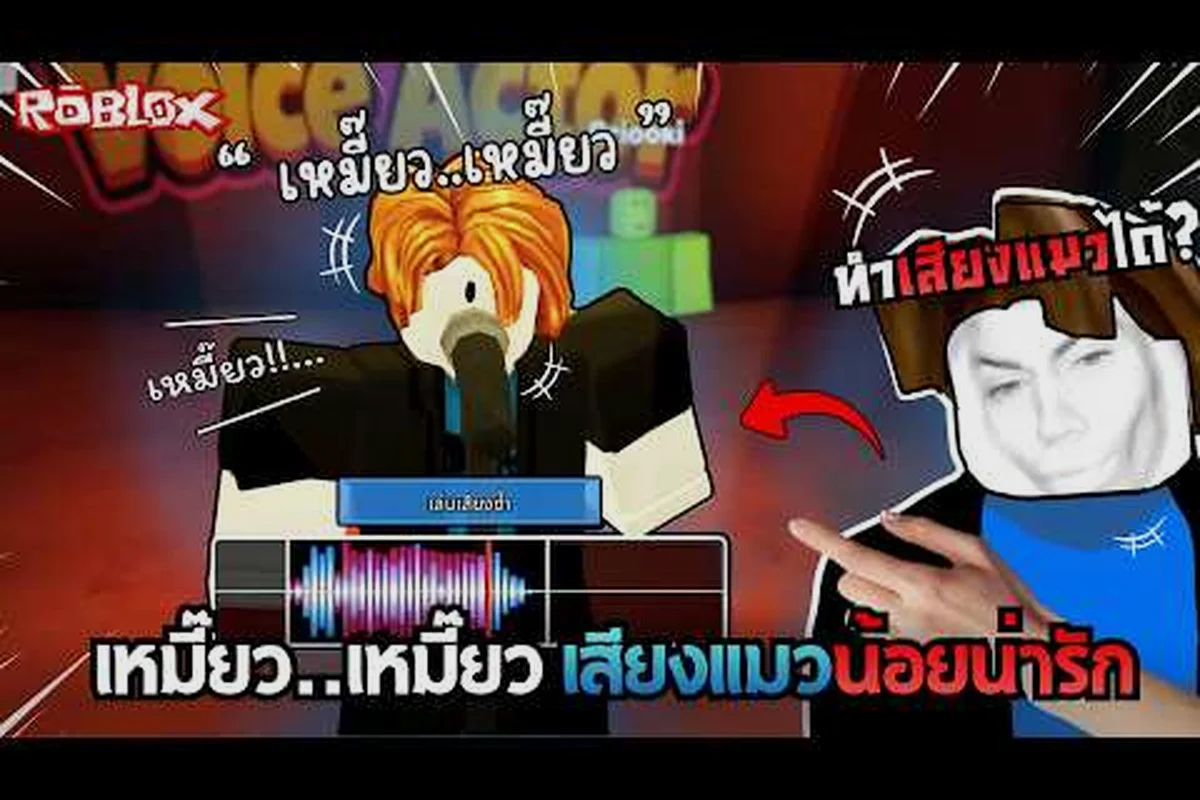
Because no official patch notes exist, community data becomes the practical reference point. The most-viewed English gameplay upload comes from the the YouTube channel that posted the upload, whose Roblox footage shows what a round looks like in motion rather than in a static table. Watching a full round there reveals which sounds appear most frequently in the rotation and how the scoring bar reacts to different delivery styles.
| Signal | What It Shows | Why It Matters |
|---|---|---|
| [UPD 2] listing tag | Current content version marker | Only public confirmation that the library changed |
| 2026-09-18 timestamp | Most recent update push | Separates new sounds from legacy clips |
| 1,537,018 visits | Total accumulated traffic | Indicates a large enough sample for difficulty trends |
| 98.3% approval | Like-to-dislike ratio | Confirms the core scoring loop feels fair to most players |
| 7-player server cap | Maximum lobby size | Small groups mean every vote carries more weight |
The absence of a submission channel is the single most important structural fact about this sound list update. You cannot request a custom clip, suggest a new sound, or vote on what gets added next. The developer curates the entire library alone, which means the best sounds to pick shift entirely based on what that one account decides to push in each version tag.
How to Do the Sounds Without Burning Your Voice
Learning be a voice actor how to do the sounds well starts with understanding that the scoring model rewards clarity over volume. Players who scream every impression tend to lose votes to players who match the clip's actual pitch contour, even when the loud version feels more energetic. The microphone picks up distortion as noise, and the scoring bar treats that noise as a mismatch rather than enthusiasm.
The core loop is simple: listen to a clip, copy it into your microphone, and get scored. But the difference between a 40% match and an 85% match comes down to three controllable factors. First, your mouth-to-mic distance should stay consistent across every attempt because sudden proximity changes create plosive spikes that read as errors. Second, your breath support needs to start before the clip plays, not after, so the first syllable lands cleanly. Third, your pitch anchor should match the clip's dominant frequency rather than your natural speaking voice.
| Technique | What to Do | Common Mistake |
|---|---|---|
| Mouth-to-mic distance | Keep 2-3 inches consistently | Leaning in for loud sounds, pulling back for quiet ones |
| Breath support | Inhale before the clip starts | Starting the sound on empty lungs |
| Pitch anchor | Match the clip's dominant frequency | Using your normal speaking pitch for every sound |
| Syllable timing | Land the first syllable exactly on cue | Rushing the opening or trailing the ending |
| Volume ceiling | Stay under the distortion threshold | Treating louder as automatically better |
Community reports consistently show that vowel-heavy sounds score higher for beginners than consonant-heavy ones. A long "ooo" or "aaa" gives the scoring model a stable frequency band to measure, while a clipped "k" or "t" sound leaves almost no sustained signal to evaluate. This is why animal impressions and siren sounds tend to be the best sounds to pick for new players, while mechanical clicks and whispered phrases rank among the hardest.
The sound difficulty ranking guide breaks down which impressions sit in the easiest and hardest tiers, and that tier data aligns with what this update's rotation seems to favor. When you know which sounds give you the widest scoring margin, you can spend your early rounds building confidence instead of fighting the microphone.
Sound Imitation Tips That Actually Convert Votes
The most reliable be a voice actor sound imitation tips come from watching how the scoring bar responds to sustained vowels versus transient consonants. Sustained sounds give the model a long window to measure frequency accuracy, which means small pitch errors average out over time. Transient sounds, by contrast, demand near-perfect timing on a 50-millisecond burst, and any hesitation reads as a miss.
One underrated technique is pre-shaping your mouth before the clip finishes playing. If the sound is a cat meow, your lips should already be rounded into the "ow" position before you make any noise. If it is a car engine, your throat should be relaxed and your tongue flat. Pre-shaping removes the 200-300 millisecond adjustment delay that most players lose at the start of every impression.
Matching Pitch Before Matching Volume
The scoring model appears to weight pitch accuracy more heavily than amplitude, based on community testing across multiple rounds. A quiet impression at the correct frequency often outscores a loud impression at the wrong frequency, which flips the instinct most new players bring into the lobby. Before you worry about being loud enough, record yourself once and check whether your pitch contour tracks the clip's contour.
This matters because the microphone's automatic gain control can mask volume differences but cannot fix frequency mismatches. When two players both attempt a siren sound, the one who matches the rising-then-falling pitch pattern wins even if their volume is lower. The one who just yells a flat tone loses regardless of how loud they are.
Using Silence as a Scoring Tool
Most players treat silence as a mistake, but intentional pauses inside an impression can actually boost your score. If the clip contains a natural break, such as a dog bark followed by a pause followed by another bark, matching that rhythm matters more than filling the gap with noise. The scoring model measures timing against the clip's envelope, and extra sound during a silent window counts against you.
This is especially true for multi-part sounds like a phone ringing or a doorbell followed by footsteps. Players who rush through all parts in one continuous stream lose points on the transitions, while players who respect the clip's internal rhythm gain a measurable advantage. The best sounds to pick for practicing this skill are ones with obvious internal structure rather than continuous drones.
Be A Voice Actor How to Mimic Sounds by Difficulty Tier
Understanding be a voice actor how to mimic sounds effectively requires sorting the library into difficulty bands, because the same technique does not work equally well across every clip. The current rotation, as observed in the [UPD 2] version, appears to group sounds into three rough bands: vowel-dominant, rhythm-dependent, and consonant-precise.
Vowel-dominant sounds are the easiest because they give the scoring model a stable frequency to measure. These include animal howls, sirens, and long human vocalizations like yawning or singing a single note. Rhythm-dependent sounds sit in the middle because they require timing accuracy even when the individual sounds are simple. These include clapping patterns, knocking sequences, and multi-bark dog impressions. Consonant-precise sounds are the hardest because they demand exact articulation on very short bursts, including whispered words, mechanical clicks, and tongue-twister phrases.
| Difficulty Band | Sound Examples | Scoring Challenge | Best Strategy |
|---|---|---|---|
| Vowel-dominant | Howl, siren, yawn, single-note hum | Frequency matching over time | Pre-shape mouth, sustain pitch |
| Rhythm-dependent | Clapping, knocking, multi-bark | Timing accuracy on transitions | Count beats internally, respect pauses |
| Consonant-precise | Whispered words, clicks, tongue twisters | Articulation on 50ms bursts | Slow down slightly, over-articulate |
The full sounds list breakdown catalogs which specific clips fall into each band, and cross-referencing that list with this difficulty framework helps you plan which impressions to attempt in any given round. When the rotation hands you a consonant-precise sound and you have not practiced it, the smarter play is often to simplify the articulation rather than attempt the full clip at speed.
Best Sounds to Pick for Fast Vote Wins
The be a voice actor best sounds to pick depend on your current skill level and the lobby's voting behavior, but a few impressions consistently outperform others across the [UPD 2] rotation. Animal howls lead the pack because they combine a long vowel sustain with an emotional quality that human voters find entertaining, which means they score well on both the technical bar and the social vote.
Siren sounds are the second-strongest pick because the rising-then-falling pitch pattern is easy to hear, easy to match, and instantly recognizable to every player in the lobby. Even a mediocre siren impression reads as intentional, while a mediocre mechanical click reads as confusion. Yawning and singing a single note round out the top tier because they require almost no articulation skill while still producing a clean frequency band for the scoring model to measure.
| Sound Type | Technical Difficulty | Social Appeal | Overall Win Rate |
|---|---|---|---|
| Animal howl | Low | Very high | Strong |
| Siren | Low | High | Strong |
| Yawn | Very low | Medium | Good |
| Single-note hum | Very low | Low | Moderate |
| Clapping pattern | Medium | Medium | Moderate |
| Whispered phrase | High | Medium | Weak for beginners |
The screaming sounds guide covers the opposite end of the spectrum, where loud and aggressive impressions live. Those sounds can win votes in the right lobby, but they carry a higher risk of distortion penalties and vocal fatigue, which makes them a situational pick rather than a reliable default.
Impression Tips for the Social Vote Layer
Be a voice actor impression tips extend beyond the technical scoring bar into the social vote layer, where human players decide whether your attempt felt entertaining. The scoring model and the human voters do not always agree, and winning rounds consistently requires satisfying both audiences. A technically perfect yawn can lose to a slightly sloppy but hilarious chicken impression if the lobby values humor over accuracy.
The key is to read the lobby's first two rounds before committing to a style. If players are voting for the most accurate impressions, lean into technical precision and pick vowel-dominant sounds. If they are voting for the funniest attempts, add a physical or vocal flourish that makes your impression memorable without destroying the underlying match. The 7-player server cap means you will see the same voters multiple times, so establishing a recognizable style early pays dividends in later rounds.
Building a Personal Sound Rotation
Instead of trying to master every clip in the library, build a personal rotation of five to seven sounds that span the difficulty bands. Include two vowel-dominant sounds for safe points, two rhythm-dependent sounds for mid-round variety, and one consonant-precise sound that you practice outside of matches. This rotation gives you a plan for every situation without forcing you to attempt impressions you have never rehearsed.
The headset and round strategy guide covers how your microphone choice and lobby positioning affect which sounds you can reliably deliver. A headset with a clean noise gate makes consonant-precise sounds far more viable, while a built-in laptop microphone pushes you toward vowel-dominant picks where the sustained frequency survives the extra room noise.
Frequently Asked Questions
What changed in the latest be a voice actor sound list update?
The [UPD 2] tag appeared on 2026-09-18, marking the current content version. Because the developer ships no written patch notes, the exact sound additions must be reconstructed from the listing tag, the last-updated timestamp, and in-game rotation behavior. Community observation suggests the rotation now favors vowel-dominant clips.
How do I do the sounds without hurting my voice?
Keep your mouth-to-mic distance consistent at two to three inches, inhale before the clip starts, and match the clip's pitch rather than pushing volume. Sustained vowel sounds score better than loud distortion, and pre-shaping your mouth removes the adjustment delay that causes most missed openings.
Which sounds are easiest for beginners?
Animal howls, sirens, yawns, and single-note hums are the easiest because they produce a stable frequency band that the scoring model can measure over time. Consonant-heavy sounds like whispered words and mechanical clicks are the hardest because they demand precise articulation on very short bursts.
How can I improve my impression accuracy quickly?
Practice pitch matching before volume matching, use intentional pauses to respect the clip's internal rhythm, and build a personal rotation of five to seven sounds across difficulty bands. Watching gameplay footage from community uploaders helps you see how the scoring bar responds to different delivery styles.
Does the developer take sound requests?
No. The official group page confirms there is no submission form, suggestion box, or community sound-request thread. The playable library is entirely chosen by the developer and can only change when a new update pushes, so requests posted on the group wall carry no commitment.