Winning a lobby in Be A Voice Actor rarely comes down to nailing the obvious clips. The real edge lives in be a voice actor rare sounds that most players have never practiced, because those are the moments where a mediocre impression still reads as confident and original. When a seven-player server cycles through the same familiar meme and animal clips, the voter who breaks the pattern with an obscure machine sound or a forgotten cartoon deep cut almost always walks away with the round.
What Actually Counts as a Rare Sound
The term rare does not mean the clip is hidden behind a paywall or a level gate. In this game, rarity is a function of how often a sound appears in rotation and how rarely the average lobby hears a competent version of it. The official Roblox page for Be A Voice Actor shows a hard seven-player server cap and a fast round rotation, which means players get roughly one microphone pass per clip before the lobby moves on. That pacing is exactly why uncommon picks work: voters do not have time to compare your take against a polished reference, so they reward novelty and commitment over technical precision.
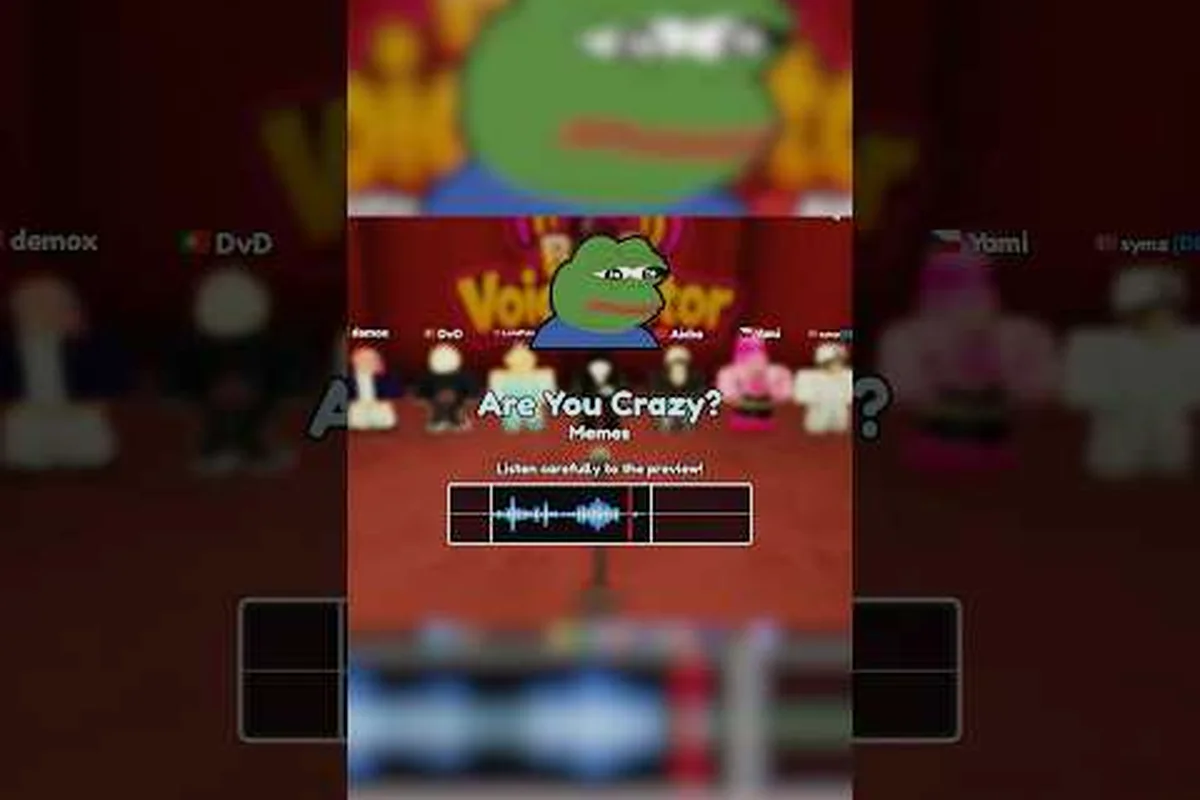
Community gameplay uploads, including the session captured by a short gameplay upload by DotGI, confirm that difficult or unexpected clips often trigger the strongest lobby reactions. When a sound is rare enough that nobody has a preloaded impression for it, the first confident attempt becomes the baseline that everyone else is judged against. That is a structural advantage, not a skill gap.
Why Rarity Beats Accuracy in Short Rounds
A rare sound lowers the accuracy bar because the voting pool has no shared memory of what a perfect version should sound like. If you attempt a common dog bark and miss the pitch, three voters will instantly know it was wrong. If you attempt an obscure industrial machine sound and land even 60 percent of the texture, the lobby hears a bold choice rather than a failed imitation. This is why the sound accuracy breakdown matters less for rare picks than for meta staples: the scoring curve flattens when the reference is unfamiliar.
| Sound Type | Voter Familiarity | Accuracy Pressure | Upset Potential |
|---|---|---|---|
| Common meme | Very high | Very high | Low |
| Standard animal | High | High | Medium |
| Cartoon deep cut | Medium | Medium | High |
| Obscure machine | Low | Low | Very high |
| Rare sound effect | Low | Low | Very high |
The table shows the core tradeoff. Every step down in voter familiarity reduces the accuracy pressure and increases the chance that a committed attempt steals the round. That does not mean you should ignore common sounds entirely, but it does mean your practice time is better spent on clips that most lobbies have never heard performed well.
Rare Meme Sounds That Still Surprise Voters
Meme sounds are the most saturated category in the game, but saturation hides a useful gap. Players memorize the top ten viral clips and ignore the second and third tier of meme audio, which means those mid-tier clips function as be a voice actor meme sounds that still catch a lobby off guard. The key is to avoid the clips that appear in every tier list and instead target meme sounds that require a specific vocal texture or a weird rhythmic pattern.
The Forgotten Meme Tier
The strongest rare meme picks are usually older formats that newer players have never heard in context. A sound that was everywhere two years ago is effectively new to a lobby full of players who joined the game last month. Community reports suggest that meme sounds with a musical or rhythmic component tend to score higher than pure one-liners, because the rhythm gives voters something to latch onto even when the words are slightly off.
-
Rhythmic meme clips work because timing carries the impression even when the voice texture is wrong.
-
Distorted vocal memes reward players who can push their microphone gain without clipping.
-
Multi-part meme sounds create a mini performance arc that holds voter attention longer.
-
Regional meme audio surprises lobbies that have only heard the globalized versions.
The funniest sounds comparison covers which meme clips consistently land, but the rare tier is where you find the picks that nobody else in the lobby has prepared. A forgotten meme performed with full commitment often outscores a top-tier meme performed at 80 percent effort.
Cartoon Sounds Beyond the Obvious Impressions
Cartoon sounds are dominated by a handful of celebrity voice impressions that every player has attempted at least once. The rare opportunity lives in be a voice actor cartoon sounds that come from older animated series, international dubs, or specific sound effects rather than character voices. A cartoon sound effect like a specific door creak, a signature running noise, or a background gag can be more recognizable than a character line while being far less practiced.
Character Voices vs. Cartoon Sound Effects
Most players treat the cartoon category as an impression contest, but the actual audio library includes far more than character dialogue. Cartoon sound effects are a separate subcategory that rewards physical vocal control over mimicry. A well-executed cartoon spring bounce or a classic spin-up noise reads as a complete performance even without a single word of dialogue.
| Cartoon Pick | Type | Difficulty | Lobby Recognition |
|---|---|---|---|
| Classic character catchphrase | Voice | Medium | Very high |
| Signature running sound | Effect | Low | High |
| Background gag noise | Effect | Medium | Medium |
| International dub line | Voice | High | Low |
| Vintage cartoon explosion | Effect | Low | Medium |
The rare cartoon picks cluster in the effect rows, where recognition stays high but practice frequency stays low. A lobby that has heard ten bad Bugs Bunny impressions will reward a clean cartoon explosion or a perfect spring bounce precisely because it breaks the monotony of character voices. The meta sounds tier list shows how heavily the top ranks skew toward character impressions, which leaves the entire effect subcategory open for players who want to stand out.
Animal Sounds That Are Not Dogs or Cats
Animal sounds are the easiest category to practice and the hardest category to differentiate yourself in, because every player defaults to the same five pets. Be a voice actor animal sounds that actually surprise voters tend to come from animals with unusual vocal mechanisms or sounds that require a specific mouth shape. A horse neigh, a goat bleat, or a bird call with a precise pitch pattern all outperform the standard dog bark in terms of voter reaction, even when the execution is imperfect.
The Unusual Vocal Mechanism Advantage
Animals with non-standard vocal production give you a built-in excuse for imperfection. Nobody in the lobby knows exactly how a goat produces its bleat, so your interpretation becomes the reference. This is the same structural advantage that rare machine sounds provide, but applied to a category that voters already associate with fun rather than difficulty.
-
Goat bleats require a nasal, vibrating tone that most players never attempt.
-
Bird calls reward precise pitch control and short, repeated bursts.
-
Horse neighs combine a high-pitched whinny with a lip-flutter finish.
-
Insect sounds like cicadas or crickets create an ambient texture that stands out in a loud lobby.
-
Marine mammal sounds are rare enough that any attempt reads as original.
The animal category rewards physical commitment more than any other sound type. When you fully commit to a goat bleat or a horse neigh, the physicality of the performance becomes part of the entertainment value, which is exactly what voters are scoring in a party game context.
Machine Sounds as the Ultimate Wildcard
Machine sounds are the least practiced category in the entire game, which makes be a voice actor machine sounds the highest-upset-potential picks available. A car engine, a dial-up modem, a printer warming up, or a specific industrial alarm all require a combination of pitch control, rhythmic repetition, and microphone technique that almost nobody has rehearsed. The result is a category where a mediocre attempt still reads as a bold, original choice.
Building a Machine Sound Repertoire
The best machine sounds are the ones with a recognizable rhythmic signature, because rhythm gives voters a structure to follow even when the tone is imperfect. A dial-up modem handshake has a clear sequence of tones and static bursts. A printer has a distinct warm-up cycle followed by the mechanical print rhythm. A car engine has a rev pattern that builds and falls. Each of these gives you a performance arc without requiring a single word of dialogue.
| Machine Sound | Key Element | Difficulty | Voter Reaction |
|---|---|---|---|
| Dial-up modem | Pitch sequence | Medium | Strong nostalgia |
| Printer cycle | Rhythmic bursts | Low | Surprise |
| Car engine rev | Build and fall | Medium | High energy |
| Industrial alarm | Repetition | Low | Tension |
| Coffee grinder | Texture | Medium | Laughter |
The machine category also benefits from the fact that most players have never heard a good version of any of these sounds, so your first attempt becomes the lobby standard. The full sounds list includes the complete machine subcategory, but the rare picks are the ones that never appear in beginner guides.
Rare Sound Effects That Function as Complete Performances
Sound effects are the broadest category in the game, and most players treat it as a grab bag of random noises. The rare opportunity lives in be a voice actor sound effects that function as complete mini-performances rather than single noises. A sequence of sounds that tells a tiny story, like a door opening followed by footsteps followed by a creak, holds voter attention far longer than a single isolated noise.
Sequencing Sound Effects for Impact
The strongest rare sound effect plays are sequences, not isolated noises. When you chain two or three related effects into a coherent moment, you create a narrative arc that voters can follow. A door slam followed by running footsteps followed by a crash reads as a complete scene, and the lobby rewards the ambition even when each individual effect is only partially accurate.
-
Opening a creaky door followed by slow footsteps builds tension.
-
A phone ringing followed by a pickup and a voice creates a mini-scene.
-
A car door slam followed by an engine start and a drive-off reads as a complete action.
-
A glass breaking followed by silence and a distant reaction lands as comedy.
-
A thunderclap followed by rain sounds creates an atmosphere shift.
The sequencing approach also gives you a natural excuse to use your microphone dynamically, moving closer for quiet effects and pulling back for loud ones. That physical performance layer is something voters notice and reward, even when they cannot articulate why the take felt more complete than a single isolated noise.
Building a Practice Routine Around Rare Picks
Rare sounds only work if you have actually practiced them, because the entire advantage depends on committing fully to an unfamiliar clip. A half-hearted rare attempt reads as confusion rather than originality, which is worse than a mediocre common attempt. The practice routine should prioritize the rare picks you plan to use, not the meta sounds that every other player is already rehearsing.
The Three-Session Practice Loop
A focused practice loop for rare sounds takes about fifteen minutes per session and should cycle through three phases. The first phase is pure repetition, where you attempt the sound five to ten times without judging quality. The second phase is recording and playback, where you listen to your own take and identify the specific element that sounds wrong. The third phase is a single clean run where you apply the correction and commit to the result.
| Practice Phase | Duration | Focus | Goal |
|---|---|---|---|
| Repetition | 5 minutes | Volume and texture | Build muscle memory |
| Playback | 5 minutes | Identify weak element | Find the fix |
| Clean run | 5 minutes | Apply correction | Lock the take |
The playback phase is the most important, because rare sounds have no external reference for you to compare against. You are building your own reference standard, which means you need to hear your own attempts clearly enough to judge them. A cheap microphone with a clear mid-range response is more useful for this than an expensive mic with heavy bass coloration.
Frequently Asked Questions
What are the rarest sounds in Be A Voice Actor?
The rarest sounds are obscure machine clips, vintage cartoon sound effects, and unusual animal vocalizations that most players never practice. These picks appear less frequently in rotation and have no shared lobby reference, so a committed attempt often becomes the standard that other players are judged against.
Do rare sounds actually score higher than common sounds?
Rare sounds do not automatically score higher, but they lower the accuracy pressure because voters have no polished reference to compare against. A 60 percent accurate rare machine sound often outscores an 80 percent accurate common dog bark, because the lobby rewards novelty and commitment over technical precision.
How do I find new rare sounds to practice?
New rare sounds appear with each game update, and the official Roblox page shows the most recent patch was pushed on September 18, 2026. Check the full sound library after each update and look for categories you have never attempted, especially machine sounds and cartoon sound effects.
Which rare sound category is best for beginners?
Machine sounds are the best rare category for beginners because they rely on rhythm and texture rather than precise vocal mimicry. A printer cycle or a car engine rev gives you a clear performance arc without requiring any impression skill, which makes the first attempt feel confident rather than risky.
Can I combine rare sounds into a single performance?
Yes, sequencing two or three related sound effects into a mini-scene is one of the strongest rare plays available. A door slam followed by footsteps and a crash reads as a complete performance, and the lobby rewards the narrative ambition even when individual effects are only partially accurate.