
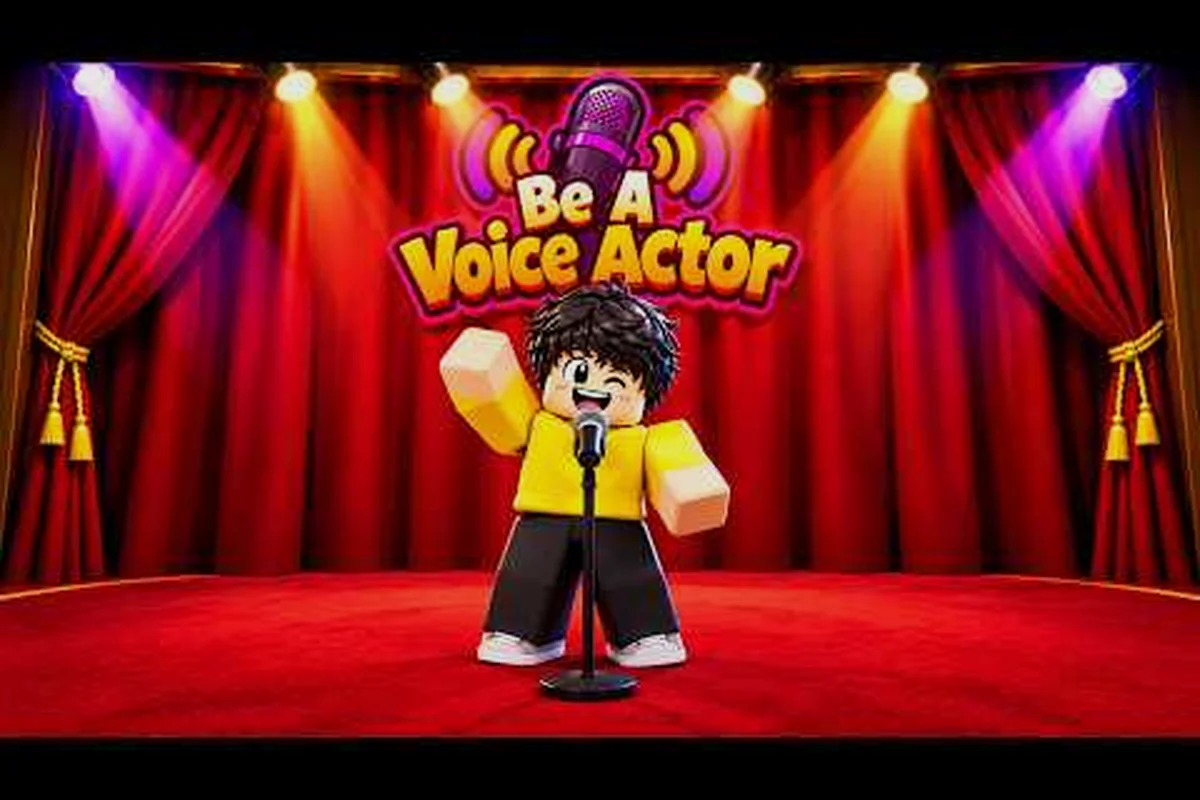
Chasing the Ace badge in Be A Voice Actor pushes every performance decision you make under the spotlight, because the badge only unlocks when your round scoring and session score align at the top of the leaderboard. The official Roblox group data shows the Ace! badge sits at around 133,226 awards while Win A Game holds 141,314, which means the gap between simply winning and earning an Ace is brutally narrow. This guide breaks down exactly how accuracy, consistency, and round-by-round execution combine so you can push toward a perfect score instead of settling for a mid-table finish.
According to the Be A Voice Actor experience page on Roblox, the Ace Badge is tied to completing specific in-game voice acting challenges and meeting the performance thresholds set by the game’s rating system.
How Round Scoring Builds Your Session Score
Every match in Be A Voice Actor runs through a sequence of imitation rounds, and each round contributes a discrete chunk to your overall session score. The scoring loop is straightforward on the surface: you listen to a clip, reproduce it into your microphone, and the game assigns a value based on how closely your performance matches the target sound. Because the game requires platform voice verification before you can even enter a scoring round, every player on the stage has already cleared the baseline technical hurdle, which means the real separation happens in execution rather than setup.
The round scoring system rewards two distinct qualities that often pull in opposite directions. Tonal match measures whether your pitch and timbre land close to the source clip, while rhythmic alignment tracks whether your delivery hits the same timing and emphasis points. A player who nails the tone but rushes the rhythm will consistently score below someone who sacrifices a little tonal polish to stay locked on the beat. Community gameplay recordings show this tension clearly: the highest-scoring performances are rarely the loudest or most theatrical, but the ones that stay tightly synchronized with the clip playback.
| Scoring Component | What It Measures | Common Failure Point |
|---|---|---|
| Tonal Match | Pitch, timbre, and vocal color against the source | Over-acting the sound instead of mirroring it |
| Rhythmic Alignment | Timing, emphasis, and pause placement | Rushing delivery to finish before the clip ends |
| Consistency Bonus | Variance across your round scores | One great round followed by two weak ones |
| Session Total | Sum of all round scores plus bonuses | Fading in later rounds due to fatigue |
The consistency bonus is where most players leak points without realizing it. The game appears to reward a tight cluster of round scores more than a single spike followed by a drop, which means your session score benefits from a steady floor rather than a high ceiling. If you can keep every round within a narrow band, the cumulative effect often outweighs one spectacular performance surrounded by mediocrity. This is why the Ace badge demands more than a lucky round; it requires a full session of controlled output.
Accuracy Score Mechanics and the Perfect Score Threshold
The accuracy score is the engine underneath every round result, and understanding its granularity changes how you approach each clip. Rather than a binary pass/fail check, the accuracy score appears to evaluate your performance across multiple frequency and timing bands, then compresses those readings into a single per-round value. Players report that subtle variations in breath control, consonant sharpness, and even microphone distance shift the accuracy score by measurable amounts, which means small adjustments compound quickly over a full session.
A perfect score in Be A Voice Actor is less about flawless imitation and more about minimizing the gap between your output and the reference clip across every scoring dimension. The game does not publish an official numeric ceiling, but community testing suggests that a perfect round requires near-zero deviation on tonal match while keeping rhythmic alignment within a tight tolerance window. Because the threshold is so unforgiving, chasing a perfect score on every round often backfires; the pressure to be flawless introduces tension that degrades your natural delivery.
| Accuracy Band | Typical Player Range | Ace Contender Range |
|---|---|---|
| Low (0-40%) | First-time players, unclear enunciation | Rarely seen after warm-up rounds |
| Mid (41-70%) | Casual players with decent mimicry | Occasional off-rounds only |
| High (71-90%) | Regulars who understand the clips | Baseline for most rounds |
| Elite (91-100%) | Top performers with tight control | Required for Ace badge runs |
The relationship between accuracy score and session score is not purely additive. A high accuracy round early in the session can anchor your confidence and stabilize later performances, while a low accuracy round can trigger a spiral of overcorrection. The best Ace contenders treat each round as an isolated event, resetting their mental state after every clip instead of carrying the previous result into the next attempt. This psychological reset is just as important as the technical execution, because the game's scoring model punishes variance as much as it rewards raw accuracy.
Be A Voice Actor Score Tips for Climbing the Leaderboard
Improving your round scoring requires a mix of technical preparation and in-match discipline. The most effective score tips from experienced players focus on controlling what you can measure: microphone setup, clip familiarity, and delivery pacing. Before you even queue into a match, verify that your input level sits in a clean range without clipping or excessive background noise, because the accuracy score appears to penalize distorted or muddy audio even when the underlying performance is solid.
One of the most overlooked score tips is to treat the first round as a calibration opportunity rather than a must-win moment. Because the game cycles through a rotating library of clips, you will encounter sounds you have never attempted before, and trying to force a perfect score on an unfamiliar clip usually produces a worse result than a controlled, slightly conservative delivery. Use the first round to gauge how the game's scoring responds to your voice, then apply that feedback to subsequent rounds where the clips may repeat or share similar characteristics.
-
Warm up your voice for 2-3 minutes before queuing to loosen your range and reduce early-round stiffness
-
Keep a consistent microphone distance across all rounds, because moving closer or farther shifts your tonal profile
-
Match the clip's energy level exactly rather than adding your own dramatic interpretation
-
Breathe at the same points as the source clip when possible, since pause placement feeds into rhythmic alignment
-
Reset mentally after every round to prevent one weak score from contaminating the next attempt
The full scoring breakdown goes deeper into how the game calculates individual round values, but the practical takeaway is that consistency beats brilliance. A player who scores 75% on every round will often outrank someone who alternates between 95% and 55%, because the session score rewards a stable floor over a volatile ceiling. Focus on raising your worst rounds rather than extending your best ones.
How to Win Rounds with a Strategic Approach
Winning rounds in Be A Voice Actor is not the same as winning the session, and understanding the difference shapes your strategy. A round win typically goes to the player with the highest single-round accuracy score, while the session win goes to the player with the best cumulative total. This means you can lose several individual rounds and still take the overall match if your floor stays high, which is why the Ace badge favors consistent performers over flashy one-round wonders.
The strategic layer comes from reading the lobby and adjusting your aggression level accordingly. If you are in a lobby with several high-accuracy players, pushing for a perfect score on every round becomes a high-variance gamble that often backfires. Instead, aim for the upper end of your reliable range and let other players make the mistakes that drop them out of contention. Conversely, in a weaker lobby, you can afford to push harder on rounds where you feel confident, because the downside of a miss is smaller relative to the field.
| Lobby Type | Recommended Strategy | Risk Level |
|---|---|---|
| Weak lobby (low average scores) | Push for elite accuracy on familiar clips | Low |
| Mixed lobby (mid-range scores) | Maintain steady 75-85% floor, spike selectively | Medium |
| Strong lobby (high average scores) | Prioritize consistency, avoid risky over-performances | High |
| Unknown lobby (first match) | Calibrate in round one, then adjust | Medium |
The winning strategy guide covers the voting and judging dynamics in more detail, but the core principle is that controlled aggression wins more rounds than reckless ambition. When you watch top players in community recordings, their performances look almost understated compared to the theatrical attempts from lower-ranked players. That restraint is deliberate: the scoring model rewards precision over passion, and every ounce of energy spent on showmanship is energy not spent on matching the clip.
Session Score Optimization Across Multiple Rounds
Optimizing your session score requires thinking beyond individual rounds and managing your energy across the entire match. Most players start strong and fade in the later rounds, which creates exactly the variance pattern that drags down a session total. The fix is to pace your vocal output so that your last round is as controlled as your first, which means resisting the urge to empty the tank on an early clip that you happen to know well.
Fatigue affects different aspects of your performance at different rates. Vocal fatigue degrades your tonal match first, making your pitch wander and your timbre thin out, while attention fatigue degrades your rhythmic alignment as you start rushing or lagging behind the clip. Because these two failure modes hit at different times, you need to monitor both separately. If your tone is slipping but your timing is fine, back off the intensity and focus on clean, simple delivery. If your timing is drifting, slow down and re-anchor to the clip's beat.
-
Front-load your warm-up, not your effort so you enter round one loose but not spent
-
Take a slow breath between rounds to reset your vocal tension and mental focus
-
Track your own score trend mentally, and adjust intensity if you see a downward slope
-
Save your highest-effort attempts for clips you recognize rather than burning energy on unknowns
-
Accept that some rounds will be average and protect your floor instead of chasing every point
The session score is a marathon metric, not a sprint metric, and the players who consistently earn the Ace badge treat it that way. If you are new to the game and want to build the foundational habits that make session optimization easier, the beginner guide walks through the core mechanics from the ground up. But even experienced players benefit from revisiting their pacing, because the gap between a good session and an Ace-level session is usually found in the later rounds where focus slips.
Frequently Asked Questions
What exactly is the Ace badge in Be A Voice Actor?
The Ace badge is a progression achievement that unlocks when you demonstrate top-tier performance in a scoring session. According to the official Roblox group page, the Ace! badge has been awarded roughly 133,226 times as of late September 2026, placing it just below the the match win badge in rarity.
How is the accuracy score different from the session score?
The accuracy score measures how closely your performance matches the source clip on a single round, evaluating tonal match and rhythmic alignment together. The session score is the cumulative total of all your round scores plus any consistency bonuses, which means a high accuracy round only helps if your other rounds stay competitive.
Can I earn the Ace badge without winning every round?
Yes, because the Ace badge appears to reward overall session performance rather than individual round wins. A player who finishes second or third in several rounds but maintains a high, stable floor can outscore someone who wins one round spectacularly and crashes in the others, since the session total punishes variance.
What is the fastest way to improve my round scoring?
Focus on rhythmic alignment before tonal match, because timing errors are easier to correct and produce faster score gains for most players. Record yourself practicing against the same clip multiple times, then compare your delivery to the source and adjust your pacing until the emphasis points line up naturally.
Does microphone quality affect my accuracy score?
Microphone quality matters less than microphone consistency, because the scoring model appears to evaluate the relationship between your output and the reference clip rather than raw audio fidelity. A clean, stable input at a consistent distance will outperform an expensive microphone used inconsistently, so prioritize setup discipline over hardware upgrades.